German Knife Showdown
Wüsthof vs Henckels:Which Is Actually Better?
 By
By Last updated August 2026 · Prices checked monthly
Wüsthof for lifetime buyers. Zwilling Pro for value hunters. Skip Henckels International entirely.
After sharpening hundreds of both: Wüsthof edges out on steel hardness and edge retention. Zwilling Pro wins on price, especially on sale. The real mistake is comparing Wüsthof to the wrong Henckels (twin-man logo = budget stamped line, not the same thing).
Wüsthof Classic 8"
~$170 · X50CrMoV15 (~58 HRC)
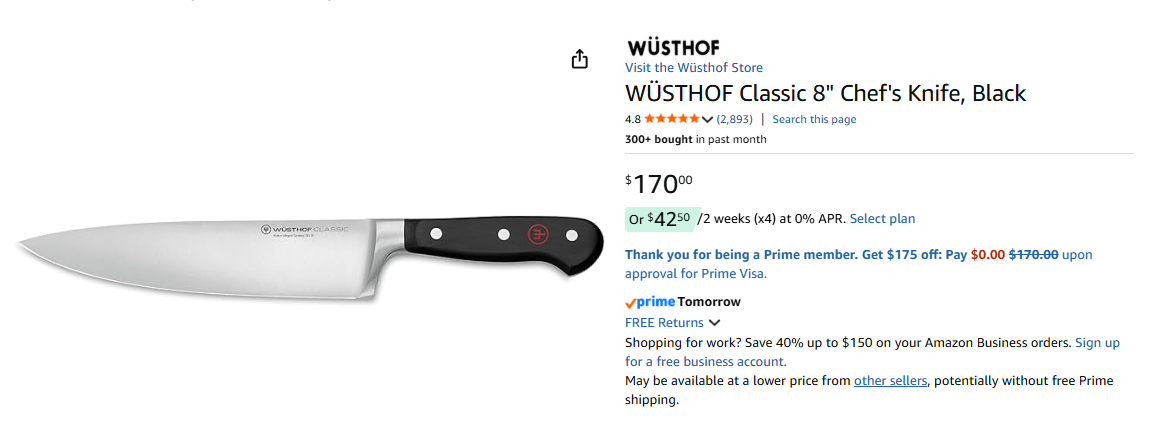
- ✓Best edge retention of the two
- ✓Legendary multi-decade durability
- ✓Classic triple-rivet full bolster
Zwilling Pro 8"
~$110 · Special formula (~57 HRC)
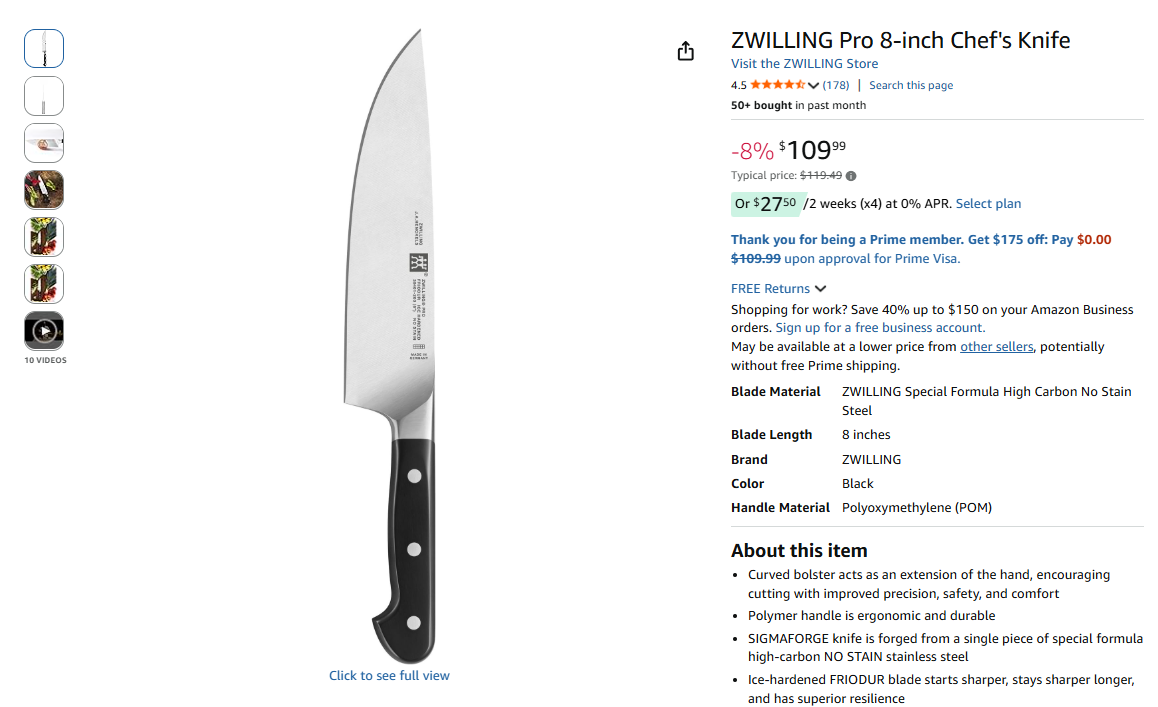
- ✓Lighter, less fatigue on long prep
- ✓Curved bolster, easier to sharpen
- ✓Most performance for a lower price
As an Amazon Associate, Seriously Fast Sharpening earns from qualifying purchases. This costs you nothing extra and helps keep this guide free.
Head-to-Head Comparison
Already own one of these? I sharpen both Wüsthof and Henckels in Austin, mobile or drop-box, edge matched to how you actually cook.
Book Sharpening →Price Comparison: Is Wüsthof Worth the Extra $30–70?
Wüsthof Classic runs $170–200 for an 8" chef's knife; Zwilling Pro runs $100–140, a $30–70 gap depending on where you buy. At full retail, Wüsthof is the more expensive knife. On sale, Zwilling Pro often hits sub-$100, which is where the value equation shifts dramatically.
If you'll own one German chef's knife for the next 20 years, the extra $50 for Wüsthof is the easiest investment. If you're budget-sensitive and find a Zwilling Pro on sale under $100, you're getting most of the performance for a noticeably lower price.
Quality & Performance: The Steel Tells the Story
Both brands use proprietary German stainless steel in the same alloy family, but Wüsthof heat-treats to ~58 HRC while Zwilling hits ~57 HRC. That one point of Rockwell hardness is the root cause of every performance difference between them, edge retention, sharpening difficulty, and chip vs. roll failure mode.
✓ Wüsthof Advantages
- ✓Slightly harder steel (~58 HRC) = better edge retention
- ✓Heavier feel, weight does more cutting work
- ✓Legendary multi-decade durability
- ✓Classic triple-rivet handle, instant recognition
✓ Zwilling Pro Advantages
- ✓Lighter weight, less fatigue on long prep sessions
- ✓Curved bolster = full heel access for sharpening
- ✓Lower purchase price
- ✓Unique handle ergonomics suit some grips better
Durability: How Long Will They Last?
Both will outlast their owners, the durability gap isn't between Wüsthof and Zwilling Pro, it's between forged and stamped. I've sharpened Wüsthof Classics from the 1990s that are still daily drivers. I've sharpened Zwilling knives from the same era in the same condition. The forged construction is what matters; the one-point hardness difference is irrelevant at the lifetime scale.
Where Wüsthof does have a genuine edge: the blade maintains its geometry slightly better over decades of use, because harder steel resists the micro-deformation that accumulates with thousands of cuts.
Ease of Maintenance: The Bolster Is the Real Story
The biggest sharpening difference between these two brands isn't the steel, it's the bolster design. Henckels/Zwilling Pro's curved bolster leaves the heel fully accessible from the first sharpening to the last. Wüsthof's traditional full bolster can gradually block clean access to the heel as the blade shortens over many sessions.
Wüsthof's traditional full-bolster models can block clean access to the heel. Their newer demi-bolster (half-bolster) models, and Henckels/Zwilling Pro's curved bolster design, don't have this issue. If you're buying Wüsthof and plan to keep it sharpened for decades, the demi-bolster is the easier knife to maintain.
Best Use Cases: Which Knife Is Right for You?
Choose Wüsthof Classic If You:
- ✓Want one knife for life
- ✓Prefer heavier, blade-forward balance
- ✓Value maximum long-term durability
- ✓Use professional sharpening services
Choose Zwilling Pro If You:
- ✓Want German quality at a better price
- ✓Sharpen your own knives at home
- ✓Prefer a lighter, thinner blade
- ✓Find a sale under $100
Quick Decision Table by Cooking Scenario
Henckels vs Zwilling: The One-Man vs Two-Man Logo Trap
Henckels is actually two different companies under one parent, and the logo tells you which one you're buying. This single fact explains most of the confusion in online reviews.
ZWILLING J.A. Henckels (single-man logo) = forged German knives made in Solingen. These compete with Wüsthof.
J.A. Henckels International (twin-man logo) = budget stamped knives, often made outside Germany. These do not compete with Wüsthof.
If you're comparing a $30 Henckels International set against a $170 Wüsthof Classic, you're comparing apples to crowbars.
Total Cost of Ownership Over 10 Years
Over 10 years, the total cost of ownership is nearly identical between the two brands, Wüsthof's purchase premium is almost entirely offset by its slightly longer edge retention requiring fewer sharpening sessions.
Wüsthof Classic 8" Chef Knife
Results vary by sharpener, equipment, and usage. Assumes professional sharpening at $15 per session.
Zwilling Pro 8" Chef Knife
Results vary by sharpener, equipment, and usage. Assumes professional sharpening at $15 per session.
Over 10 years, the total cost is nearly identical, Wüsthof's purchase premium is almost entirely offset by the slightly longer edge retention. The real cost difference is the first-day purchase price. If you sharpen your own, Zwilling Pro saves money on purchase AND is easier to maintain at home. Note: results vary by sharpener and equipment. That $15/session is my Austin rate →
What We Notice Sharpening Both Every Week
I sharpen 20–30 German knives a week. Here are patterns you won't find in product reviews:
Wüsthof chips before it rolls; Henckels rolls before it chips
That one point of hardness (58 vs 57 HRC) shows up, the harder Wüsthof edge fails by micro-chipping when it meets a hard board or bone, while the softer Henckels edge tends to roll or bend instead. Neither is better, a rolled edge is easier to bring back, a chipped edge needs more steel removed.
The failure mode is about more than hardness
It's the mix of hardness, steel type, the cutting surface, and the angle the knife was last sharpened to. A more acute edge slices beautifully but is less stable; a higher angle is more durable. I've seen identical models fail completely differently between two kitchens because one cook used a glass board and the other used end-grain wood.
I match the angle to the knife, not a rule
I ask every customer for special requests first and explain the trade-offs. If the knife's in good shape I keep the factory edge, around 15° per side on these German blades. If someone keeps chipping edges, I repair and take it to a slightly more durable angle for how they actually cook.
Only the older full-bolster Wüsthofs fight me at the heel
Wüsthof's traditional full bolster can block clean access to the heel during sharpening, which matters over many sessions. Their newer demi-bolster models, and Henckels/Zwilling Pro's design, don't have this issue. If you're buying Wüsthof for decades, the demi-bolster is the easier knife to maintain.
Both outlast their owners with care
I regularly sharpen Wüsthof and Henckels knives from the '80s and '90s that still perform. The difference was never longevity, it's how much maintenance they ask for along the way.
Bring yours in. I sharpen both Wüsthof and Henckels in Austin, porch pickup or drop-box, edge angle matched to how you actually cook.
Book Sharpening →Win Free Sharpening, Wüsthof or Henckels
Every month I pick one winner for a free professional sharpening on their German knife. Mail it in or drop it by in Austin. Enter once, you're in every month's drawing.
One winner drawn monthly. No purchase necessary. We'll only email you about the drawing and the occasional sharpening tip.
Common Questions
Either Way, We Sharpen Both
Whether you choose Wüsthof or Henckels, professional sharpening keeps a German knife performing at its best for decades.
Seriously Fast Sharpening, Austin since 2022 · Text Michael: (512) 791-6572 · Monday through Friday 9 AM–6 PM
Also see: Shun vs Wüsthof