Austin’s most-reviewed mobile sharpening · porch pickup
Knife Sharpening
in Austin, TX
What's actually worth knowing before you hand someone your knives.
144 verified Google reviews · 4.8★ · Austin & surrounding cities
A good knife is one of the few tools in your kitchen that gets better with the right care and quietly worse without it. Most people in Austin don't realize how far their knives have drifted from sharp — it happens a little at a time, until one day you're crushing a tomato instead of slicing it.
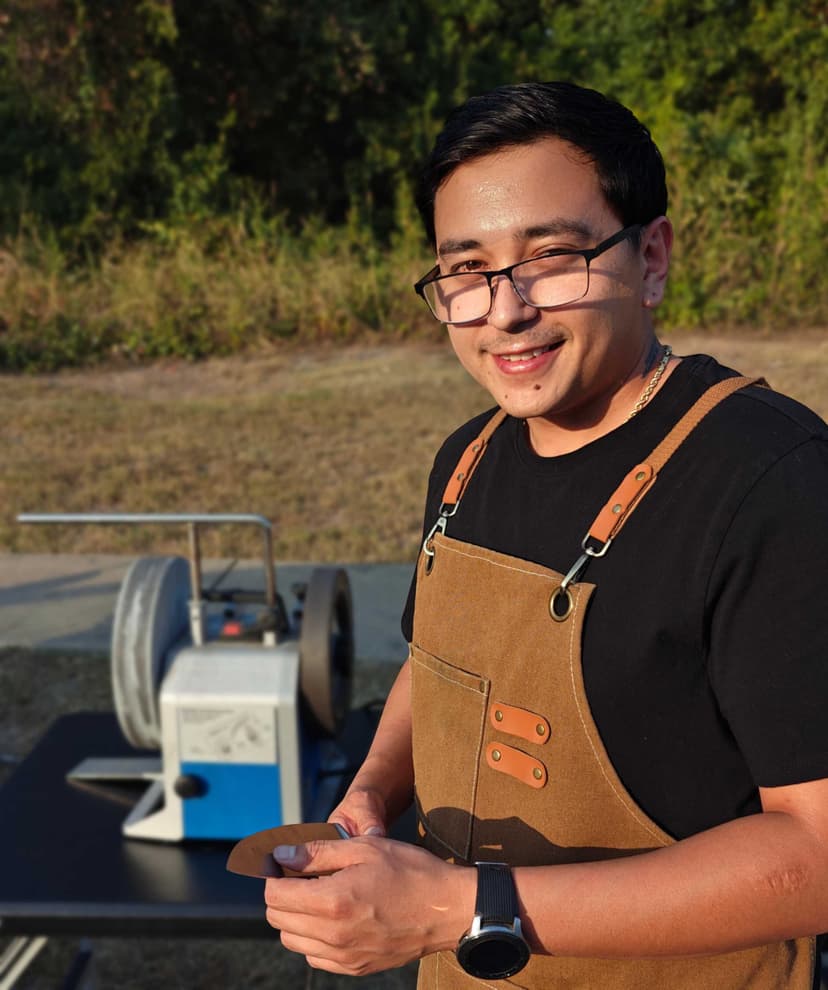
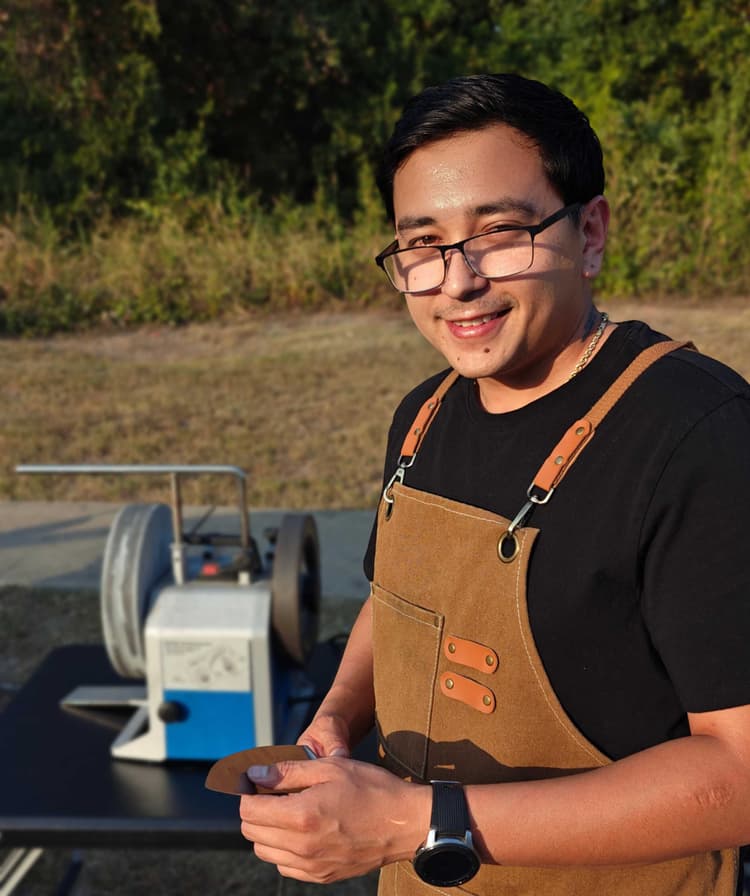
I'm Michael. I run Seriously Fast Sharpening, and I sharpen blades in Austin every single day — home kitchens, restaurants, food trucks, the serious collectors and the someday-I'll-learn-to-cook crowd alike. Over the past few years I've built this into the most-reviewed mobile sharpening service in the city, one edge at a time, and helped sharpeners in other cities build the top-rated service in their own markets.
Here's the thing nobody tells you: getting your knives professionally sharpened in Austin shouldn't require driving across town and going without them for two or three days. It should come to your door. This page walks through what good sharpening actually involves, what it should cost, and how to tell the difference — whether you end up booking with me or not.
Why it matters
Why a sharp knife matters more than you think
Most people in Austin are cooking on duller knives than they realize. It's not neglect — it's that dulling happens invisibly. Every cut shaves a few microns off the edge, and because it creeps in over months, you adjust without noticing. You press a little harder. You saw instead of slice. You assume that's just how the knife is now. It isn't.
It's safer.
This is the part people get backwards. A dull blade feels harmless, but it's the dangerous one — it won't bite, so you add force, and force is what sends a blade skating off an onion and into your thumb. A sharp knife goes exactly where you point it. Less pressure, more control, fewer trips to the ER.
It makes your food better.
A sharp edge parts a tomato, an herb, a piece of fish cleanly — the cells stay intact, so nothing bruises, weeps, or turns ragged. A dull edge crushes and tears. You can taste the difference in a basil leaf, and you can see it in how a steak rests. If you've invested in good ingredients, a dull knife is quietly undoing that work.
It comes back cared for, not just ground down.
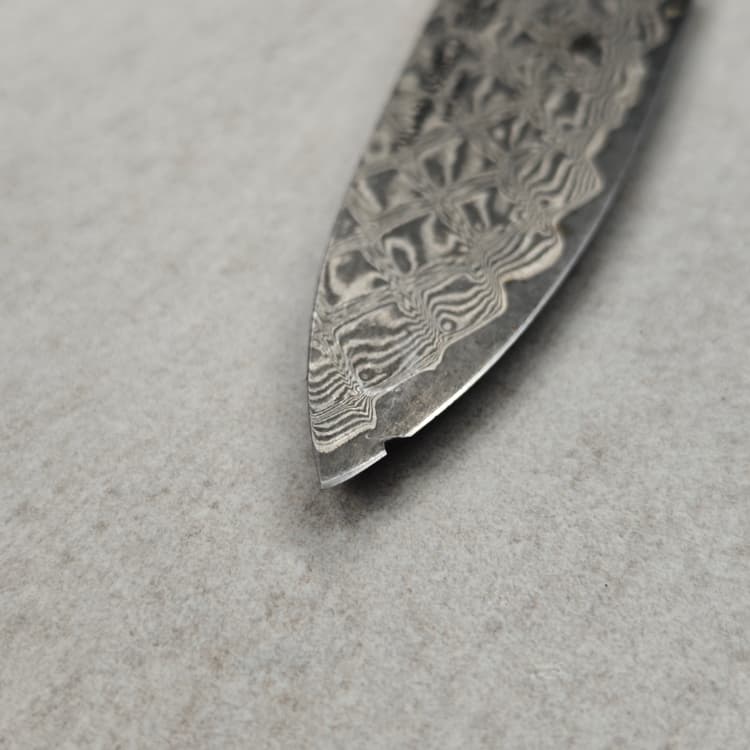
This is the part you can't see in an “after” photo but you feel the first time you cook. A lot of sharpening is rushed — clamp it, grind it, hand it back, next. That's how you get a blade that's technically sharp but unevenly ground, with a wire edge that rolls in a week or a heel that's been taken down too far. After years of doing this every day, I've learned the opposite habit: slow down, read each blade, and take off only what it needs. Your knife isn't a unit on a line.
What to look for
What to look for in a knife sharpener in Austin
Not all sharpening is the same, and not all sharpeners are evaluating the same way. Here's what actually matters when you're deciding who to trust with your knives.
Do they come to you — or do you go to them?
This is the question most guides skip, and it’s the one that decides whether good sharpening actually fits your life. A workshop drop-off means loading the car, driving across town, and going two or three days without your knives. A mobile sharpener picks them up from your porch and brings them back. Same craft, none of the friction. Ask which model they run before anything else.
Is repair included, or billed as an extra?
Chips, rolled tips, and worn-down heels are normal wear — most knives that come to me need at least a little. Some sharpeners quote a low per-knife rate and then add $20-40 when they find damage. Look for someone who includes chip and tip repair in the price, so the number you’re quoted is the number you pay.
How do they sharpen — and do they give you a choice?
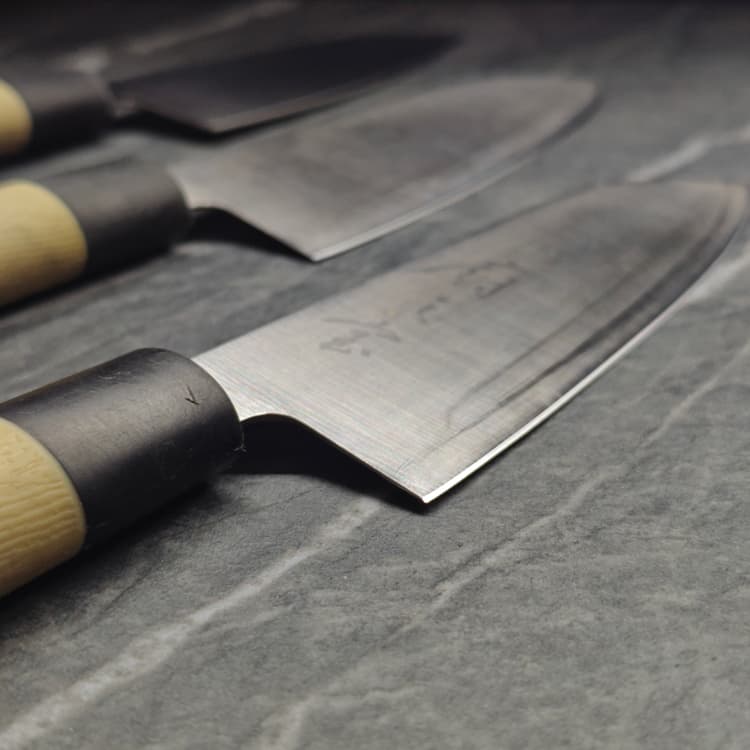
You’ll hear a lot of “whetstone good, everything else bad.” The honest version is more useful: the right method depends on the blade and what you want from it. A good sharpener matches method to knife — a precise, time-efficient belt-and-stone finish for everyday kitchen knives, and full Japanese whetstone work for those who want it. The best ones let you choose per knife instead of forcing one approach on everything.
Transparent pricing you see before you book.
Be cautious of anyone who can’t give you a clear, itemized price up front — base rate, any repair, pickup fee, all of it — before you commit. Transparency is the trust signal. A clear flat rate by size, with repair included, tells you exactly what you’re getting; a vague “it depends, I’ll let you know” usually means surprises.
Read the reviews — don’t just count them.
A big number on its own doesn’t tell you much. Read what people actually say, check whether the reviews are recent, and look for specifics — real names, the knife or tool they brought, the neighborhood, the actual situation. For a local Austin service, you’d expect most reviews to come from actual Austin customers describing real local jobs. A steady stream of detailed, recent, genuinely local reviews tells you a sharpener is consistent, active, and trusted by the people right around you — which matters more than a round number on a banner.
Turnaround that respects your time.
There are two traps with sharpening speed in Austin, in opposite directions. On one end are the five-minute, in-and-out operations — fast, but fast usually means a quick pull-through or a rushed pass that doesn’t do the blade justice. On the other end are the home-workshop drop-offs — careful work, but you lose your knives for two or three days and make two trips across town to get them back. The thing to look for is someone who does neither: careful, hand-finished work and a quick turnaround. With porch pickup, I take the time each blade actually needs — and most orders are still picked up, sharpened, and back at your door fast, often the same day. Careful and quick aren’t opposites. You just have to set it up so they aren’t.
Real, demonstrated experience — not a borrowed title.
What matters isn’t a job title from years ago. It’s whether someone sharpens every day, has handled thousands of blades, and has results you can actually check. I’m self-taught. I built this from nothing starting in 2022, put a proper edge on more than 20,000 blades since, and I do it every single day. The proof is in the reviews and the work, not a resume line.
Pricing
What knife sharpening costs in Austin
Reputable knife sharpening in Austin generally runs $10–20 per knife, depending on size and any repair needed. Scissors vary more widely — anywhere from $8 for a basic pair to $20+ for specialty shears. The range exists because skill, equipment, and method vary a lot. A quick pull-through sharpener and a hand-finished edge are both called “sharpening” but they're not the same thing.
At Seriously Fast Sharpening, pricing is flat-rate — the number you see is the number you pay. Chip and tip repair always included.
A note on price: the cheapest option isn't always the best value — a rushed sharpening that grinds off too much steel costs more in the long run. But a high price isn't proof of quality either.
Every price above is the full price. No add-ons, no service fees, nothing extra at pickup. If you want Japanese whetstone-only work, that's available at 2× the knife rate — choose it per knife when you book. See full pricing →
How it works
Drop-off vs. porch pickup in Austin
There are really three ways to get your knives sharpened in Austin, and the right one depends on how much friction you're willing to take on.
Drop-off.
You bring your knives to a sharpener’s workshop, usually by appointment, and pick them up a day or two later. It’s the most common model, and it works — but it’s built around the sharpener’s schedule, not yours. Two trips, your gas, your time.
Porch pickup (what I do).
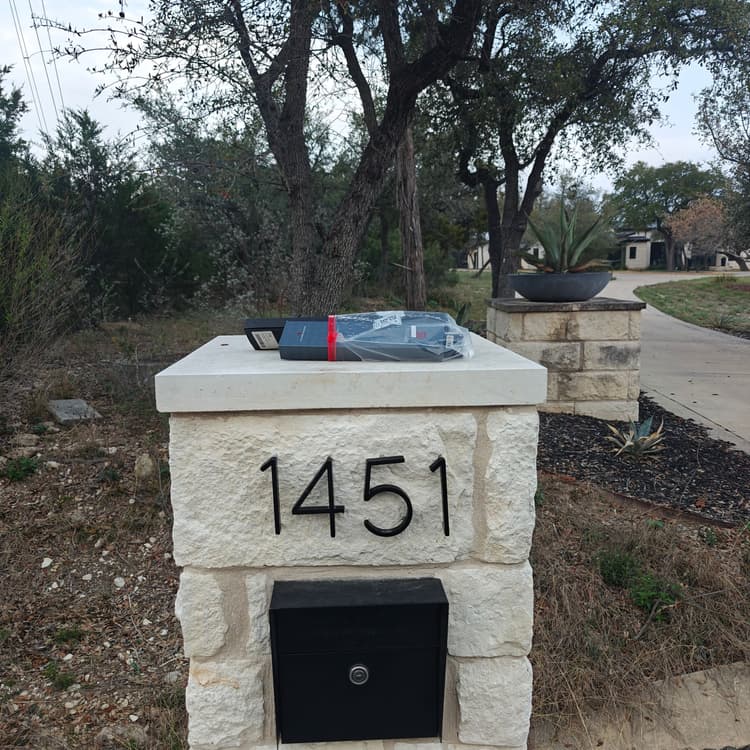
You don't go anywhere. Leave your knives on the porch, and I collect them, sharpen them properly at my workshop, and return them to your door. Porch pickup has a $150 minimum plus a trip fee of $20 to $40 depending on where you are. I quote the trip fee before I book so you know the number first. That makes it ideal for a full knife block, a restaurant set, or splitting with a neighbor.
24/7 drop-box.
Just have a knife or two? My drop-box in North Austin is open any time, day or night, with no minimum and no appointment.
Same careful work in every case. The only thing that changes is how much of your day it costs you.
How often
How often should Austin home cooks sharpen?
More often than you probably are. For a home cook using their knives a few times a week, professional sharpening every three to six months is a reasonable baseline. Between sharpenings, a honing rod keeps the edge aligned and buys you time.
But the real signal isn't a calendar — it's performance. If your knife slides off a tomato's skin instead of biting into it, or you find yourself pressing down to get through an onion, it's already overdue. A sharp knife tells you when it's happy. A dull one makes you work for everything.
My story
Why I built Seriously Fast Sharpening
I didn't come up through fine-dining kitchens, and I'm not going to pretend I did. I got my start as a line cook at Hot Tamale's in Albuquerque — I wasn't living behind a knife every shift, but that time taught me what makes a blade a pleasure to use and what makes one a frustration.
What actually sharpened my skill is the work I do now. More than 20,000 blades since 2022, sharpened every single day, working directly with customers to learn how they cut, what they cook, and how they like an edge to feel. That's how I dial each knife to the person holding it.
These days I sharpen for just about everyone who depends on a sharp edge in Austin — home cooks, food trucks, landscaping crews, small-engine shops, and professional kitchens from a chef at Shogun Japanese Grill to the team at Emmer & Rye and the Michelin-starred Hestia. Every blade gets the same careful attention, whether it's a $400 gyuto or a beat-up machete.
Common questions
Knife sharpening in Austin — FAQ
How much does knife sharpening cost in Austin?
Knife sharpening at Seriously Fast Sharpening: knives under 7 inches are $15, knives 7 inches and over are $20. Scissors start at $8. Tools like axes start at $15, mower blades are $10. Chip and tip repair is always included. Porch pickup available with a $150 minimum.
Do you come to me for knife sharpening in Austin?
Yes. Leave your knives on the porch -- I pick them up, sharpen them at my workshop, and return them to your door. Porch pickup has a $150 minimum plus a trip fee of $20 to $40 depending on where you are. I quote the trip fee before I book so you know the number first.
How often should I sharpen my knives in Austin?
For a home cook using knives a few times a week, professional sharpening every 3-6 months is a good baseline. The real signal is performance: if your knife slides off a tomato skin instead of biting in, it's overdue.
Is there a knife sharpening drop box in Austin?
Yes. A 24/7 drop-box is available in North Austin with no appointment and no minimum -- ideal if you just have one or two knives.
Book knife sharpening in Austin
Ready for an edge that's actually sharp?
If you're in Austin and your knives need attention, I'll come get them. Leave them on the porch, or use the 24/7 drop-box in North Austin — either way, sharpened right, not just fast.
Or text Michael directly: (512) 791-6572
$10-$20 by size · Chip & tip repair included · Porch pickup citywide · Most-reviewed mobile sharpening in Austin