Knife Care · Austin, TX
How to Maintain Kitchen Knives Between Sharpenings
A sharp knife stays sharp longer when you treat it right. These are the habits that matter, from a professional who sharpens full-time in Austin.
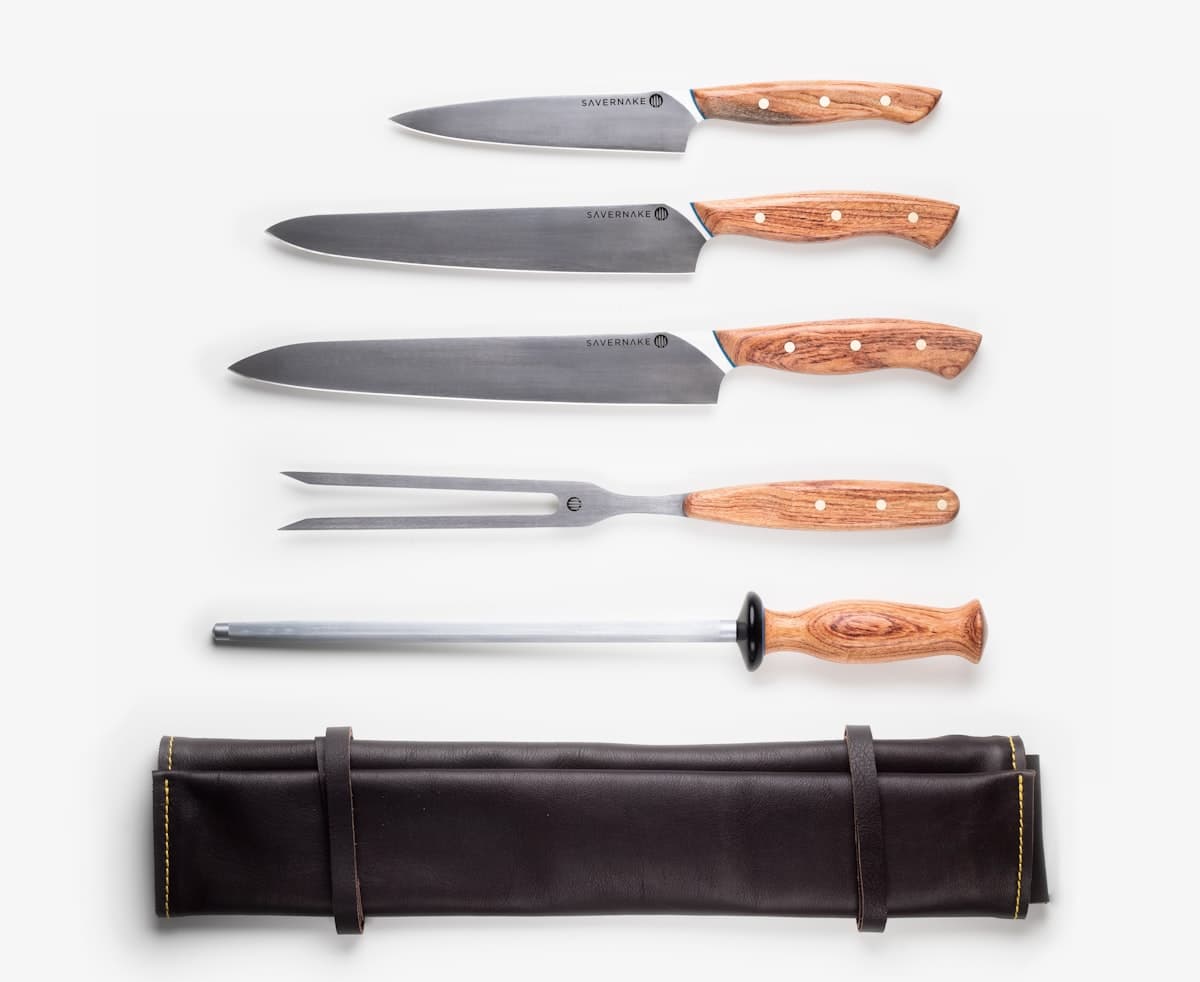
Magnetic strip storage keeps edges from dulling between sharpenings, one of the simplest wins in knife care.
The One Rule
A knife dulls from contact with hard surfaces and improper storage, not from cutting food. Control the contact, and your knife stays sharp.
Honing Correctly
Hone Before Every Use
Honing does not sharpen, it realigns the microscopic edge that folds over during cutting. Done consistently, it makes a sharp knife feel sharp for months. Use a smooth ceramic or smooth steel rod, not a ribbed butcher steel.
Ribbed honing steels vs smooth rods: A ribbed steel is more aggressive and removes a small amount of metal. For frequent use, a smooth ceramic rod preserves more blade over time. Both are fine, avoid electric pull-through "honers."
Storage
Store Blades Separately and Dry
The fastest way to dull a knife outside of cutting is letting it knock around in a drawer. Every contact with another metal object rolls or chips the edge. Three good options in order of preference:
Magnetic Strip
Wall-mounted, keeps blades visible and dry. No blade-to-blade contact.
Knife Block
Slots protect blades. Insert spine-first to avoid dulling on the slot edge.
Blade Guards
Individual plastic guards for each knife, great for drawer storage when done right.
Cutting Surfaces
Your Board Matters as Much as Your Knife
Maintenance Schedule
When to Do What
The Test
How to Know When Your Knife Actually Needs Sharpening
Take a ripe tomato and try to slice it with no downward pressure, just the weight of the blade and a smooth forward stroke. If the skin resists or the knife pushes rather than slices, it needs sharpening. Honing will not fix this. A dull knife that tears food is also a safety hazard, it requires more force and slips unpredictably.
Book a sharpening in Austin