Best Kitchen Knives forHome Cooks in 2026
Honest recommendations across every budget, from $50 starter knives to $400 heirloom pieces. Real advice from a professional sharpener who sees them all, every week.
★ Written by Michael Kempf, professional knife sharpener serving Austin since 2022
For most home cooks, start with a quality 8-inch chef's knife in the $100–200 range from brands like Wüsthof, Victorinox, or MAC. This gives you 95% of what expensive knives offer at a fraction of the cost.
Skip the knife sets. Buy one excellent chef's knife, add a paring knife and bread knife as needed, and put the savings toward keeping it sharp. A sharp $100 knife outperforms a dull $500 one every single time.
My Honest Picks by Budget
Knives I see regularly, know perform well, and would recommend to friends and family.
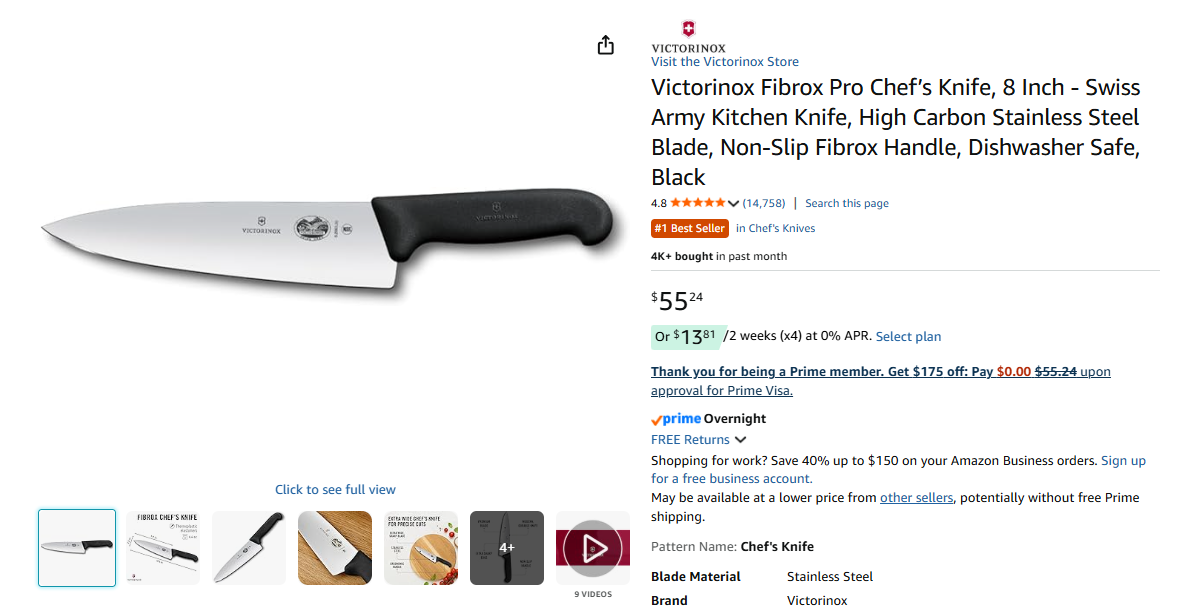
The workhorse of professional kitchens worldwide, including many Michelin-starred restaurants. The plastic handle isn't fancy, but it's comfortable, hygienic, and virtually indestructible.
Why it's great
- ✓Exceptional value, performs like knives 3× the price
- ✓Swiss-made with excellent quality control
- ✓Takes and holds a sharp edge well
- ✓Easy to sharpen and maintain
Limitations
- ✕Plastic handle isn't aesthetically premium
- ✕Edge retention good but not exceptional
- ✕Not as thin or laser-sharp as Japanese knives
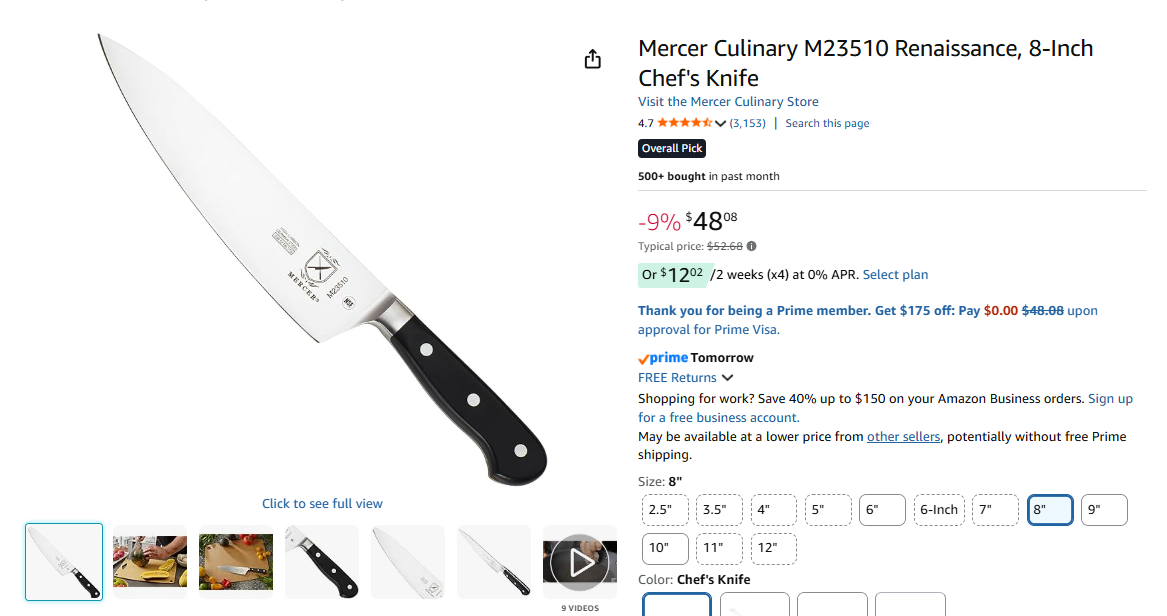
If you want something that feels more premium than the Victorinox without spending much more, the Mercer Renaissance is excellent. Better edge retention and a more comfortable handle, though performance differences are marginal.
Why it's great
- ✓Slightly better edge retention than Victorinox
- ✓More premium feel and handle
- ✓Excellent price-to-performance
Limitations
- ✕Still a budget knife, edge won't match $150+ options
- ✕Less widely available for in-store testing
Already own a good knife? I sharpen all of these in Austin, porch pickup or drop-box, edge matched to how you actually cook.
Book Sharpening →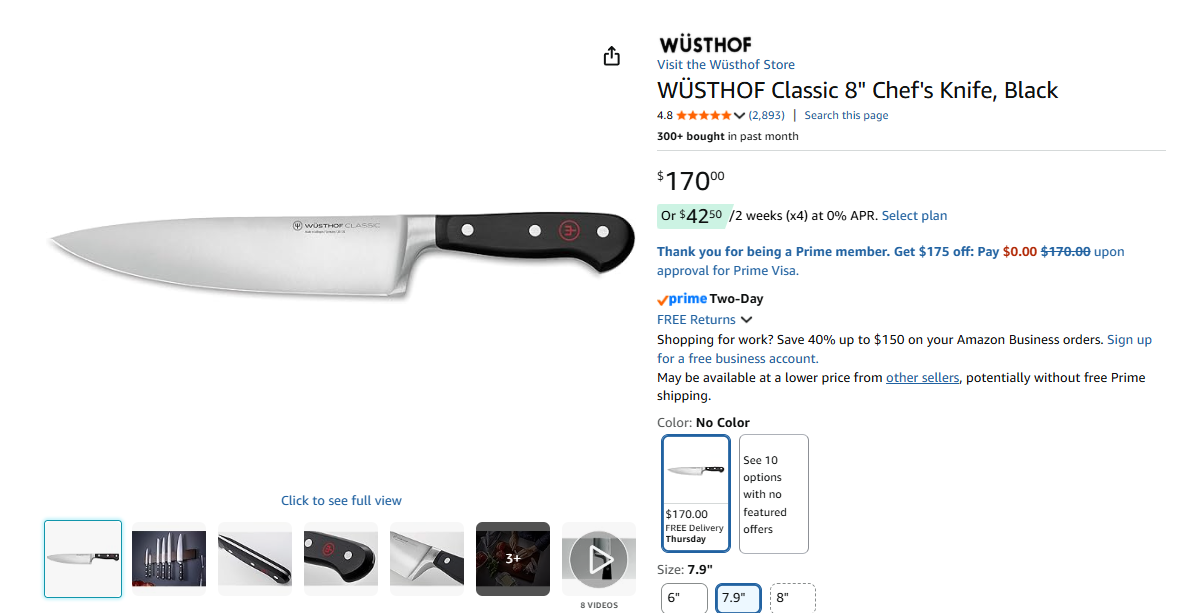
The Wüsthof Classic is, in my opinion, the best all-around kitchen knife for most home cooks. Perfect balance between performance, durability, ease of maintenance, and price. This is the knife I gift to friends and family getting serious about cooking.
Why it's great
- ✓Perfect weight and balance for most cooks
- ✓Forged German steel (X50CrMoV15), tough and reliable
- ✓Excellent edge retention for the price
- ✓Full tang with triple-riveted handle
- ✓Lifetime warranty; lasts 20–30 years with care
Limitations
- ✕Heavier than Japanese knives (some prefer this)
- ✕Not as thin or sharp out-of-box as Japanese knives
- ✕Traditional design may feel old-fashioned to some
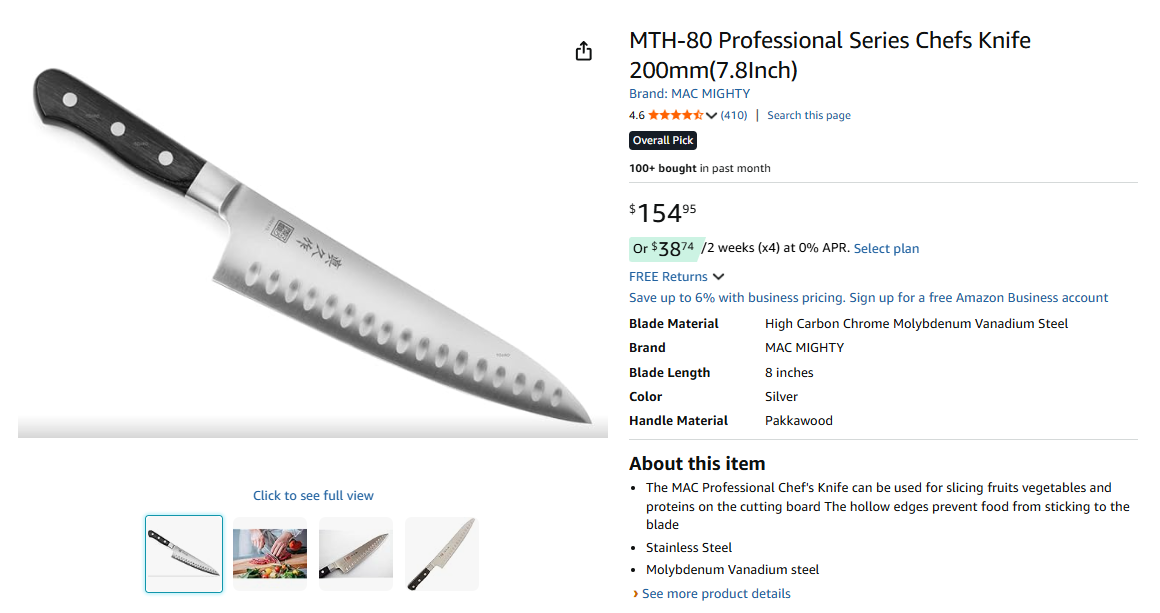
Want Japanese performance without Japanese prices or high-maintenance steel? The MAC MTH-80 is lighter and sharper than German knives but more forgiving than traditional Japanese knives. Many professional chefs swear by MAC.
Why it's great
- ✓Extremely sharp out of the box
- ✓Thin blade for precision cutting
- ✓Lighter weight than German knives
- ✓Excellent edge retention
- ✓Comfortable pakkawood handle
Limitations
- ✕Lighter weight isn't for everyone
- ✕Thin blade can chip if used improperly
- ✕Requires more careful technique than German knives
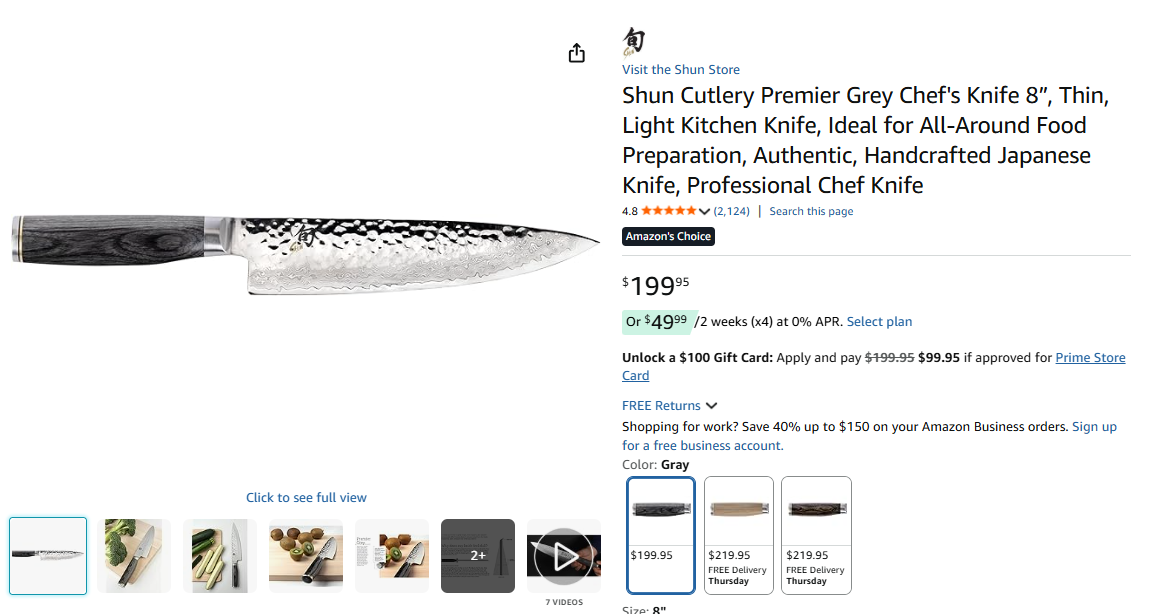
Shun knives are the entry point to premium Japanese knives. Beautiful, exceptional performance, and the quality is immediately noticeable. The Damascus cladding isn't just aesthetic, it reduces friction and food sticking.
Why it's great
- ✓VG-MAX steel (61 HRC), exceptional edge retention
- ✓Incredibly sharp 16-degree edge
- ✓Beautiful Damascus cladding
- ✓Lifetime free sharpening from Shun
- ✓Comfortable pakkawood handle
Limitations
- ✕Harder steel is more prone to chipping if misused
- ✕Requires proper cutting technique and care
- ✕Hand wash only, more maintenance than German
- ✕Significantly more expensive
As an Amazon Associate, Seriously Fast Sharpening earns from qualifying purchases. This costs you nothing extra and helps keep this guide free.
What Makes a Great Kitchen Knife in 2026?
After sharpening thousands of knives, I've learned that great kitchen knives share certain characteristics regardless of price.
1. Steel Quality and Hardness
The steel determines how long your knife stays sharp and how easy it is to sharpen. Look for hardness ratings between 56–62 HRC.
2. Edge Geometry
The angle and shape of the blade edge affect cutting performance more than steel quality. A properly ground $80 knife cuts better than a poorly ground $300 knife.
3. Handle Comfort and Balance
You'll hold this knife for thousands of hours over its lifetime. Comfort matters more than aesthetics.
4. Weight and Size
An 8-inch chef's knife is the sweet spot for most home cooks. Weight is personal preference, Germans favor heavier blades that use momentum; Japanese knives are lighter for precise control.
5. Full Tang Construction
The blade steel should extend through the entire handle. This provides better balance, durability, and longevity, the mark of a quality knife that will last decades.
6. Maintenance Requirements
Consider how much effort you're willing to invest:
7. Value vs. Price
The most expensive knife isn't always the best value. Beyond $200, you're often paying for aesthetics, brand prestige, or marginal performance gains. A well-maintained $120 knife will serve you brilliantly for 20+ years.
Common Mistakes to Avoid
Buying Complete Knife Sets
Most knife sets include knives you'll rarely use. Start with an 8-inch chef's knife, add a paring knife and bread knife, and you're set for 95% of kitchen tasks.
Choosing Based on Looks Instead of Feel
That Damascus pattern looks incredible online, but how does the knife actually feel in your hand? Weight, balance, and handle comfort matter more than aesthetics for daily use.
Ignoring Maintenance Requirements
That carbon steel Japanese knife is beautiful, but are you willing to dry it immediately after every use and oil it regularly? Be honest about your maintenance tolerance.
Skipping Professional Sharpening
Buying a $200 knife and never getting it professionally sharpened is like buying a sports car and never changing the oil.
Got One of These? I'll Put a Pro Edge on It.
Whichever knife you picked, professional sharpening is the maintenance step that makes the difference. Austin porch pickup or mail-in. Most orders back in 24 hours.
Book a Sharpening →