The Hidden Dangers of Dull Knives
You've heard the line, “a dull knife is more dangerous than a sharp one.” After sharpening 20,000+ blades in Austin, I can tell you exactly why it's true, what the injuries look like, and the seven signs your knife has quietly become unsafe.
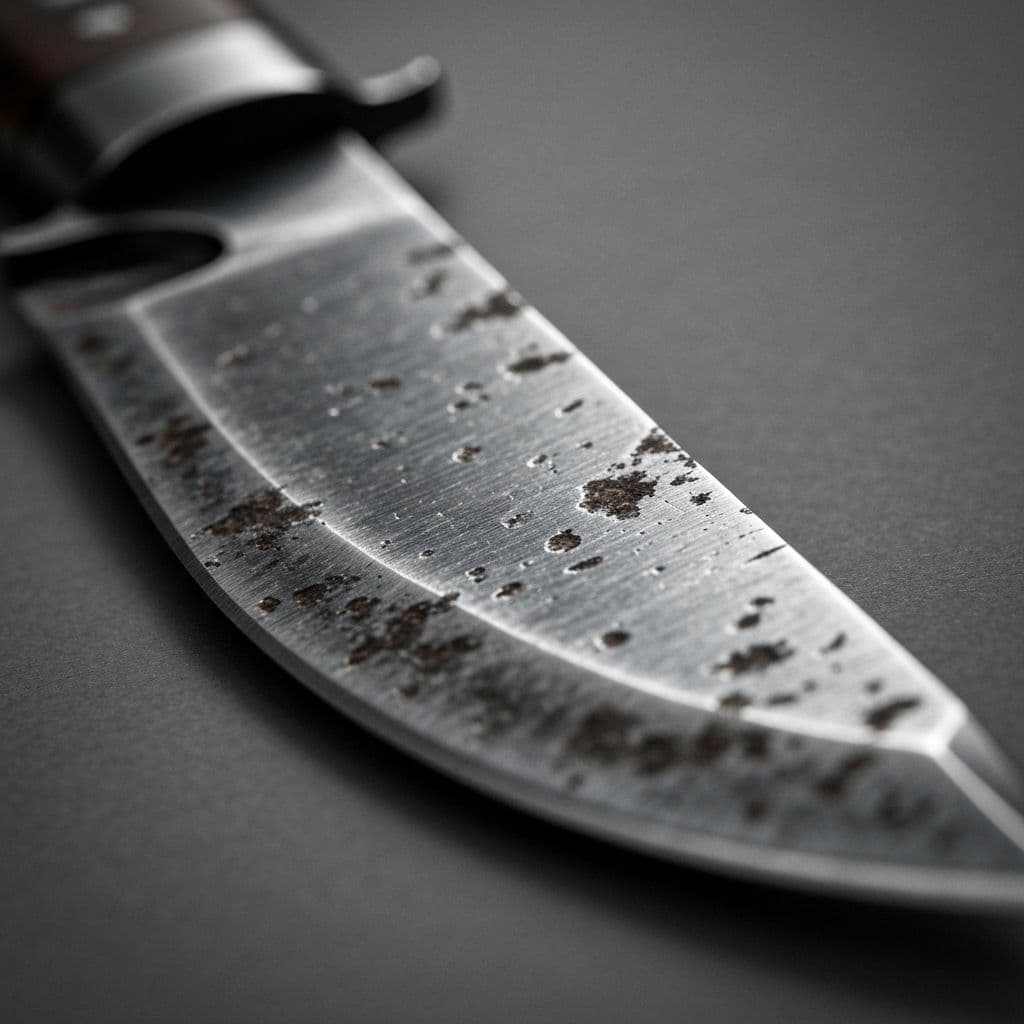
A worn, rolled edge under magnification, this is the knife most people think is still “fine.”
US ER visits per year from kitchen-knife injuriesSource: Consumer Product Safety Commission, NEISS data.
blades professionally sharpened in Austin since 2022
typical turnaround, if it's not sharper than when you bought it, I redo it
It sounds backward. The thing with the razor edge is safer than the thing that can barely cut a tomato?
Yes, and once you understand the physics, you can't unsee it. Every dull-knife accident I hear about, and I've heard a lot, traces back to the same two ingredients: extra force and lost control. A sharp knife removes both.
Here's what's actually happening at the edge, and how to tell when your favorite chef's knife has crossed from “needs sharpening” into actively dangerous.
Why a dull knife is the most dangerous tool in your kitchen
Three reasons, in the order they usually show up in a kitchen accident report.
You push harder, and lose control
A sharp edge parts food on contact. A dull one needs force to break fibers. That extra pressure is exactly what makes a slip turn from a scare into stitches: the blade builds momentum the moment it gives way.
The blade slides off the food
Tomato skins. Onion sheaths. The glossy side of a bell pepper. A dull edge won't bite, so it slips, and your other hand is almost always in the slip path.
You compensate in unsafe ways
When cutting gets frustrating, people unconsciously switch to sawing motions, cut toward their thumb, or brace food with fingers too close to the blade. Every one of those habits is a dull-knife habit.
The four accidents I hear about the most
If one of these sounds familiar, close call or otherwise, your blade is giving you a warning.
The Tomato Slip
The classic. The blade rides up the skin, you push harder, and it suddenly pops through, straight into the fingers holding the tomato.
The Onion Crush
You end up pressing the blade down through layers instead of slicing, squeezing moisture out and bending the edge in the process.
The Bread Saw
A dull chef's knife on a crusty loaf becomes a two-handed seesaw. Hand fatigue sets in, the blade wanders, and the board, or a knuckle, takes the hit.
The Boneless Chicken Shove
You can't slice through, so you lean in. When the blade breaks through the tendon, there's nothing under it but cutting board, or your stabilizing hand.
Not sure if your knife has crossed the line?
If you're in Austin or nearby, text me a photo of the edge. I'll tell you straight whether sharpening will help, no pressure, no upsell.
When DIY sharpening makes a knife more dangerous
There's a version of sharp that's actually worse than dull. These are the four I see most often when rescue jobs come in.
A knife that feels sharp isn't the same as a knife that is sharp.
A bad DIY edge can pass the paper test for 30 seconds, then roll, chip, or catch unpredictably in real use, which is a worse outcome than cooking with a knife you already knew was dull.
Overheated edge
Aggressive high-speed grinders burn the temper out of the steel, leaving an edge that looks sharp but rolls in a single use.
Inconsistent bevel
Hand-sharpening at a wobbling angle creates a convex, wavy edge that catches on food and cuts unpredictably.
Burrs left on the spine
A half-finished burr is microscopic metal hanging off the edge. It feels sharp for five minutes, then folds over and goes flat fast.
Sharpening a damaged blade
Chips, cracks, and bent tips need repair before sharpening. Skipping that step turns a weak spot into a sudden snap during use.
7 signs your knife has become unsafe
Any one of these means it's time to sharpen. Two or more means stop using it until it's been properly restored.
- Slides off tomato skin instead of biting in
- Requires a sawing motion on soft food
- Catches or snags mid-cut through onions or herbs
- Needs hard downward pressure to break through
- Crushes soft tomatoes, bread, or peaches instead of slicing
- Has visible chips, dents, or a rolled edge
- You find yourself cutting toward your thumb to make it work
Sharp = safe. Here's what you actually get.
A professional edge isn't about being impressive, it's about giving you back control of the knife. Four safety wins that kick in the second you make the first cut.
Less force, fewer slips
A properly sharpened knife cuts under its own weight on most foods, so your hand stays relaxed and in control.
Cleaner cuts if accidents happen
Sharp-knife cuts are shallow, clean, and heal faster. Dull-knife cuts are ragged, contaminated, and more likely to need stitches.
Less hand fatigue
Cooking for an hour with a dull knife leaves your grip shaky. Sharp knives keep you precise through the whole prep list.
Assessed before they come back
A good sharpener inspects for chips and rolls and tells you when a knife isn't worth restoring, so unsafe blades never go back in your kitchen drawer.
Keep your knives, and your hands, safe.
Same-day porch pickup and return across Austin. 24/7 drop-box at 9407 Longvale Dr. You don't pay until you see the results.
Frequently asked questions
The six questions I get most often about dull-knife safety.
Are dull knives really more dangerous than sharp ones?
Yes. A dull edge forces you to push harder, which reduces control and makes the blade more likely to slip off food like tomato skin or onion layers. When a dull knife finally breaks through, momentum often carries it into your other hand. Sharp knives glide with minimal pressure, less force and more control means fewer, shallower injuries.
What injuries do dull knives typically cause?
The most common patterns are slips while cutting round or glossy foods (tomato, onion, squash), crushing motions that strain hand tendons, pressure-through accidents where the blade suddenly gives way, and fatigue-related mistakes from sawing through food. These injuries tend to be deeper and more ragged than clean cuts from a sharp blade.
How often should I sharpen my knives to keep them safe?
Most Austin home cooks should sharpen every 2 to 3 months with regular use; professional kitchens are usually every 1 to 2 weeks. Hone with a steel or ceramic rod between sharpenings. Don't wait until your knife is visibly damaged, maintain the edge on a schedule so you always have a safety margin.
Can improper DIY sharpening make a knife more dangerous?
Yes. Common DIY mistakes, overheating the edge on a high-speed grinder, creating inconsistent bevel angles, leaving a burr, or sharpening a chipped blade, produce an edge that looks sharp but chips, rolls, or catches unpredictably during use. For quality knives, professional sharpening is the safer choice.
What are the signs my knife has become unsafe?
Seven warning signs: the blade slides off tomato skin, you saw instead of slice, the knife catches or snags mid-cut, you have to press down hard, it crushes soft food instead of cutting, it has visible chips or a rolled edge, or you've noticed yourself cutting toward your thumb to compensate. Any of these means it's time to sharpen, ideally professionally.
Where can I get my knives professionally sharpened in Austin?
Seriously Fast Sharpening in Austin offers same-day porch pickup and return, a 24/7 drop-box in North Austin, and a sharper-than-factory guarantee. Turnaround is typically 24 hours, with no payment required until you see the results. Text (512) 791-6572 or book at seriouslyfastsharpening.com/book.
Keep reading
More guides from the shop to help you get, and stay, on the sharp side of the line.
5 Signs Your Knives Need Sharpening
The five at-home tests I walk customers through before they book a sharpening.
Read articleWhat Dulls Knives Fastest: 5 Habits to Avoid
Dishwasher, glass board, drawer storage, the five habits quietly wrecking your edge every week.
Read articleHow Often Should You Sharpen Your Knives?
A cadence you can actually stick to, based on how much you cook and what you cut.
Read article