Drop-Box Guide · Austin TX
What Knives Should NOT Go in a Drop Box
Drop boxes work great for everyday kitchen knives. But send the wrong blade and you can permanently ruin it. Here's exactly where the line is, from someone who sharpens knives every day.
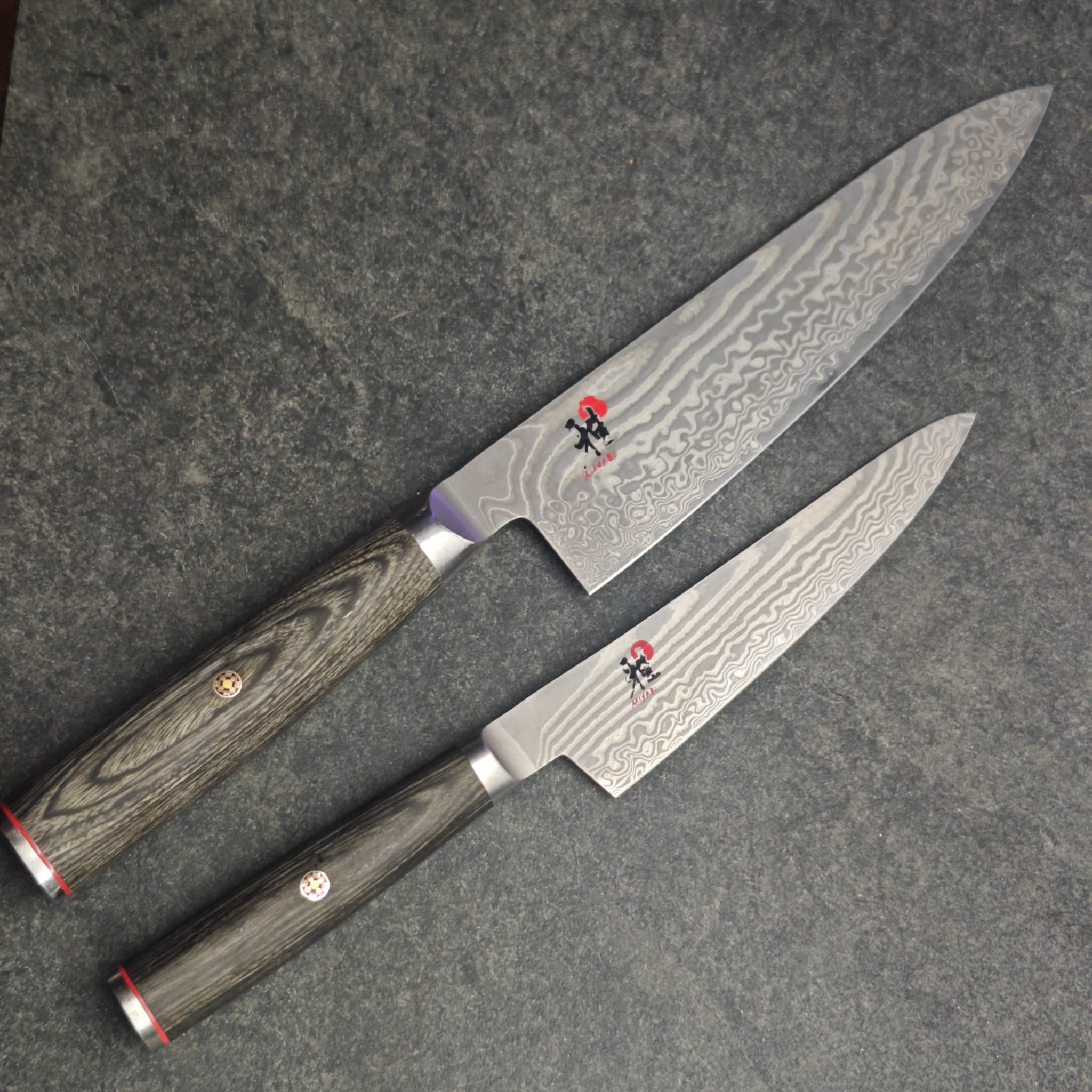
Damascus and pattern-welded knives should never go in a drop box. The layered pattern doesn't survive aggressive machine grinding.
The short version
If your knife is Japanese, damascus, single-bevel, ceramic, or costs more than you'd spend without thinking twice, book porch pickup instead. Everyday Western knives, serrated blades, scissors, and pocket knives are all fine in the drop box.
Safe for Drop Box
German-style, double-bevel
Western-made or steel above 56 HRC
Everyday stainless
Straight or serrated
Same price as any knife of that length
All blade profiles accepted
Basic and sewing shears
And similar Western brands
If you're not sure, just ask
NOT for Drop Box, Book Porch Pickup
Wrong angles, wrong steel, wrong everything
Machine grinding destroys the pattern
It deserves hand sharpening
Yanagiba, deba, usuba, needs a specialist
Requires diamond tooling, not a standard sharpener
Spine geometry can't be held steady in a jig
Irreplaceable, hand sharpen only
Finish and handle materials won't survive
Why the line is where it is
This isn't a policy for liability reasons. It's geometry, metallurgy, and honestly, respect for good tools.

Japanese knives
Japanese blades are typically made from harder, more brittle steel, often 60–67 HRC compared to 56–58 for German knives. They're also ground to steeper, more acute angles, sometimes as fine as 10–12° per side. Drop-box jigs are set for Western geometry, usually 15–20°. Putting a Japanese knife through a Western-calibrated machine doesn't just blunt the edge, it grinds away the bevel at the wrong angle and can introduce micro-cracks in the harder steel.
Single-bevel Japanese knives (yanagiba, deba, usuba) are in a category of their own. They're sharpened on one side only. Any machine contact on the flat side ruins the geometry permanently.
Damascus and high-carbon pattern steel
The layers in Damascus or san-mai steel are what give the blade its look, and those layers run all the way to the edge. Aggressive grinding with a coarse wheel removes material fast and unevenly, which can tear through layers rather than cut cleanly across them. What you're left with is a scratched-up surface pattern and an edge that was never properly refined.
These knives also tend to have softer cladding around a harder core. Machine grinding doesn't distinguish between the two, and the result is a mismatched edge with uneven hardness across the bevel.
Expensive knives (roughly $150 and up)
Drop-box machines are optimized for throughput and consistency on commodity knives. They remove metal fast. On a $30 knife that you'll replace in two years, that's fine. On a $300 Shun, a $400 Miyabi, or a $600 Bob Kramer, every unnecessary micron of metal removed is damage you can't undo.
Hand sharpening on a slow wet wheel, which is how I work, removes far less metal per pass. It's slower, but for a knife you care about, that's the point. You want it to last decades, not just be sharp today.
Ceramic knives
Ceramic blades are made from zirconium oxide, harder than steel, but brittle. Standard sharpening wheels are designed for metal and will chip or crack a ceramic edge rather than refine it. Ceramic knives require specialized diamond-coated wheels. Not every sharpener offers this service; I don't do ceramic, and I'll tell you that upfront rather than ruin your knife.
Real Work
What damage looks like, and what fixing it looks like
These are real knives I've worked on. Chip repair and tip restoration are included in every porch pickup, no upcharge.
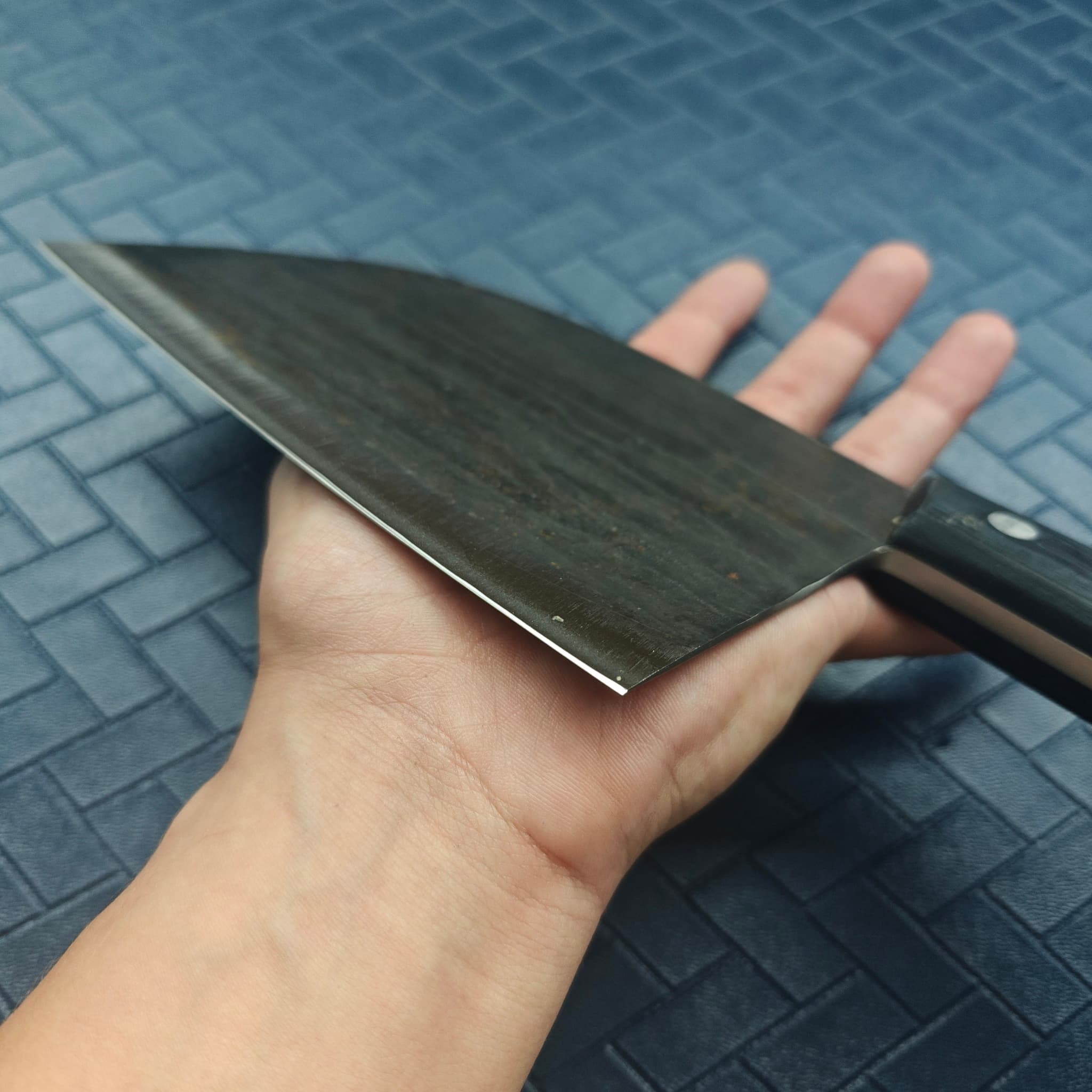
Before, chipped edge
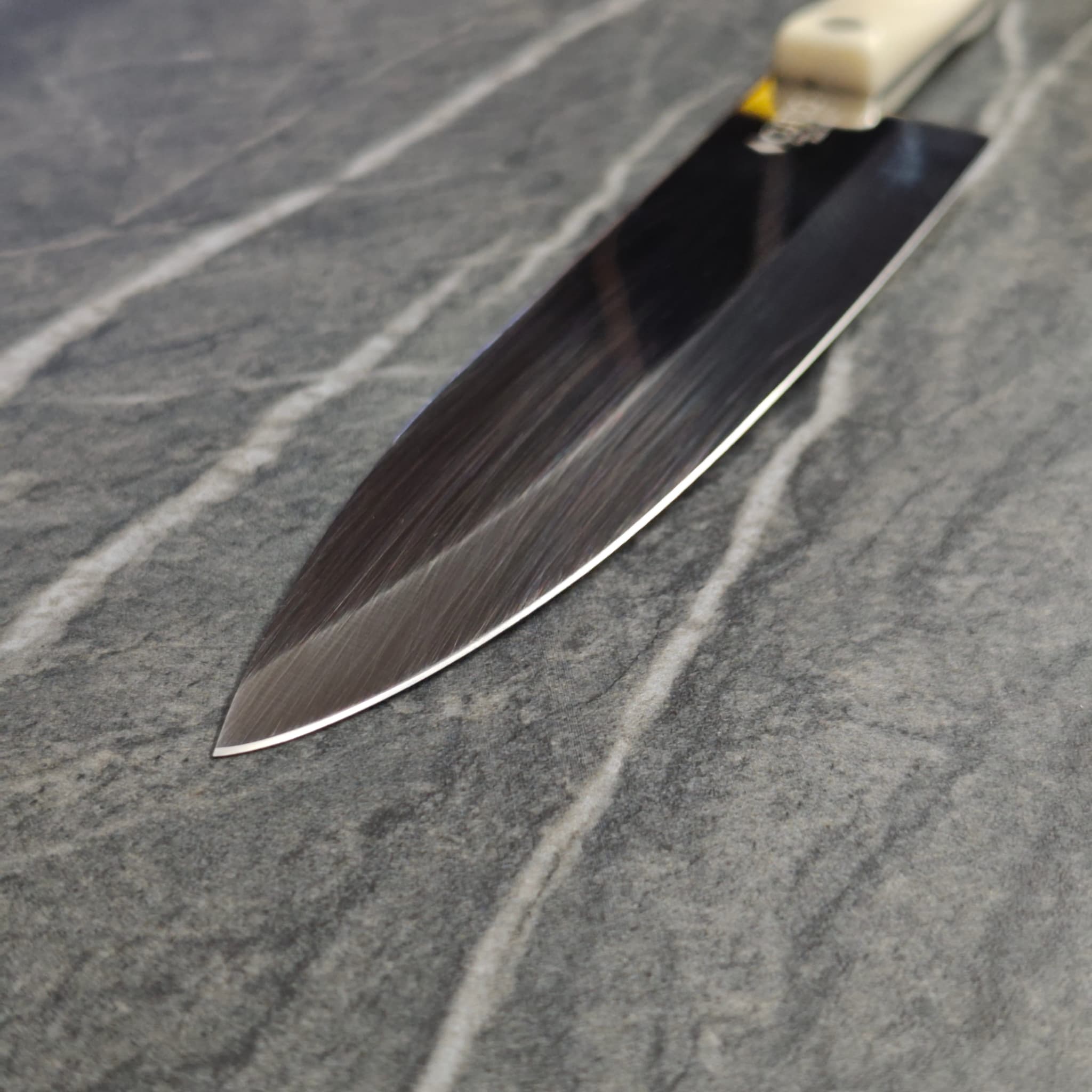
Machine grinding often causes chips like this. Hand sharpening fixes them.
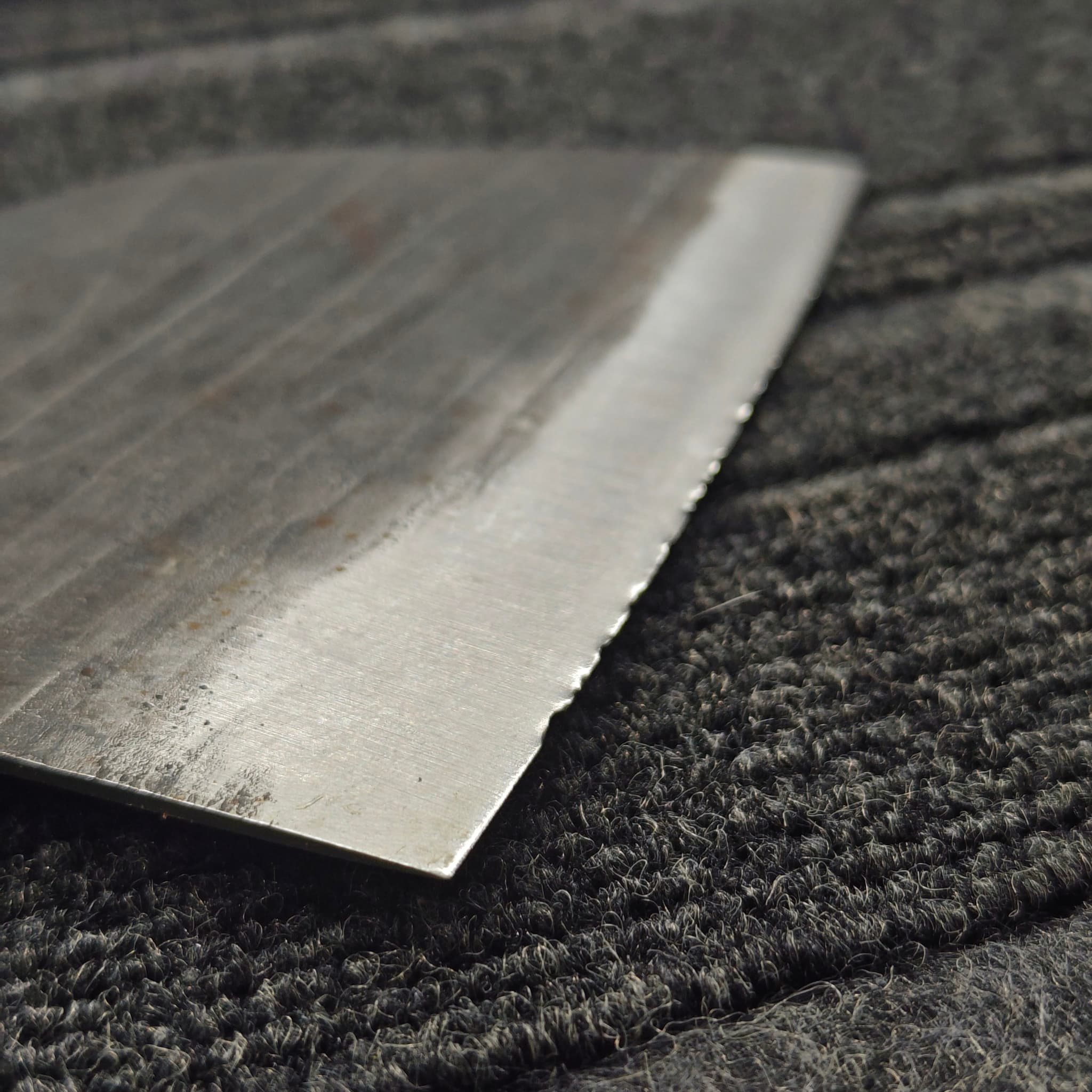
After, restored edge
Same blade. Proper geometry, full chip removal, hand-finished bevel.
What hand sharpening actually costs
Porch pickup pricing is flat by blade size, no surprise charges, chip repair always included. Most orders back within 24 hours.
Porch pickup available Monday through Friday, Austin and surrounding area. $150 minimum. Small travel fee applies, the exact amount for your area is confirmed by text before I come out. Full pricing →
Not sure which way to go?
Text me a photo of your knife at (512) 791-6572 and I'll tell you in a few minutes. No obligation.
Or just book porch pickup, I'll identify anything that needs special handling when I pick it up.